
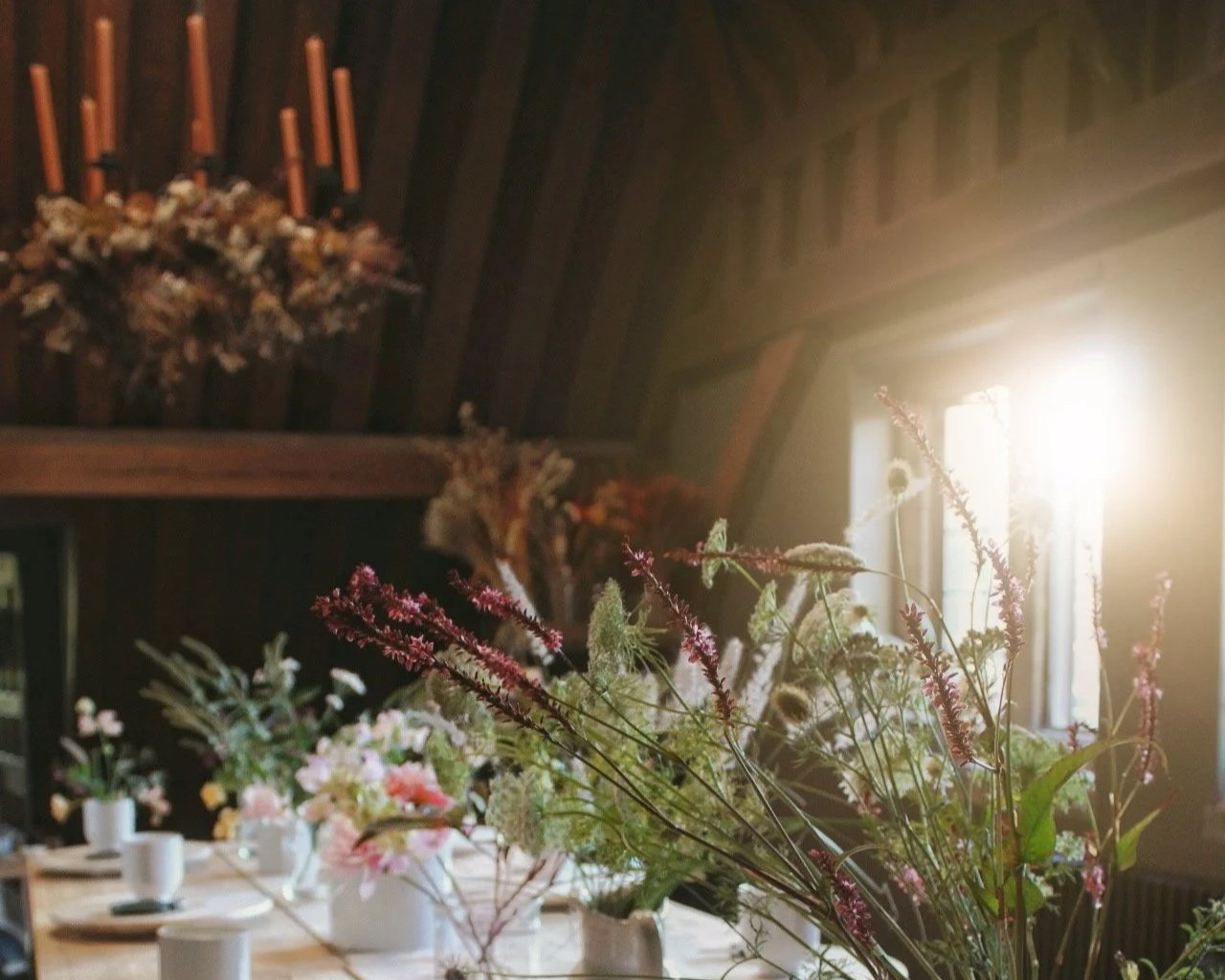
Making a Seasonal Bouquet
This page follows the same process used during the workshops.
It’s not a formula, and it isn’t about perfection. The aim is to work with the flowers as they are, allowing season, structure and balance to lead. Return to it when you need a reminder.
Preparing the Flowers
Before you begin, take time to prepare your stems properly. This stage matters more than any arranging technique.
Remove excess foliage from the lower part of each stem. (No foliage should be sitting in the water.)
Cut stems cleanly at an angle
Place flowers into fresh water and allow them to rest, preferably the night before or up to 4hrs.
Letting flowers drink and settle will make the arranging process calmer and more responsive.
Beginning the Bouquet
Pick your ingredients picking, focal, fillers, airy and foliage. Lay them all flat out in front of you, grouped together.
Work in the hand rather than building the bouquet in a vase.
Start with a small framework using the most structural stems. Crossing the stems loosely in your hand and allow space between each stem. Avoid gripping tightly, the flowers should be supported, not controlled.
As you add material, turn the bouquet slightly each time. This creates movement and prevents everything sitting on one plane.
Building Shape and Balance
Add flowers gradually, responding to what’s already there.
Vary stem heights
Let some flowers sit forward, others recede
Allow negative space, not everything needs to be filled
Avoid placing flowers by colour or importance. All material has value, whether delicate or bold. If something feels forced, remove it and try again.
Working With the Season
Use what is available and in good condition. Seasonal flowers already know how to sit together, your role is simply to support that.
Resist the urge to overwork. A seasonal bouquet should feel open, balanced and alive, not tightened into place.
Knowing When to Stop
Most bouquets are finished earlier than you think.
Pause. Look at the shape from different angles.
If it feels settled and balanced, it’s likely it’s complete.
Overworking often removes the very character you’re trying to keep.
Finishing and Placing
Bind the bouquet gently using string or twine.
Trim stems to suit the vessel you’re using.
Choose a vase that allows the bouquet to stand naturally, without being squeezed. Fresh water and a clean container will help extend its life.
There is no single correct result. Each bouquet will reflect the flowers available, the season, your preferences and the hand that made it.
Trust the process. Work slowly. Let the flowers lead.