
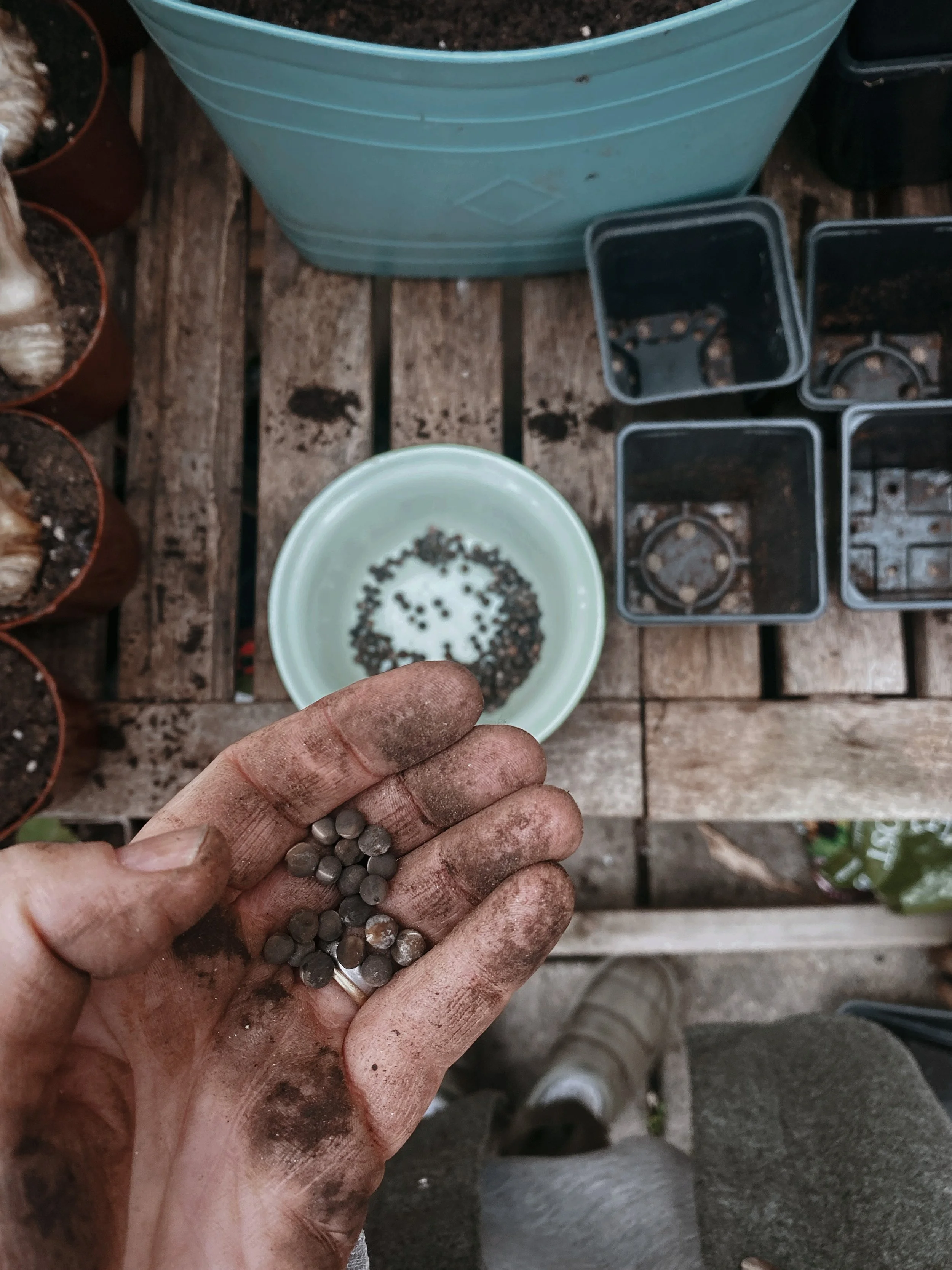
Sweet Pea Sowing Guide
Sweet peas are among the most rewarding flowers to grow, but they benefit from a steady, well judged start. This guide shares when and how to sow, how to care for young plants, and how to avoid the small mistakes that often slow them down.
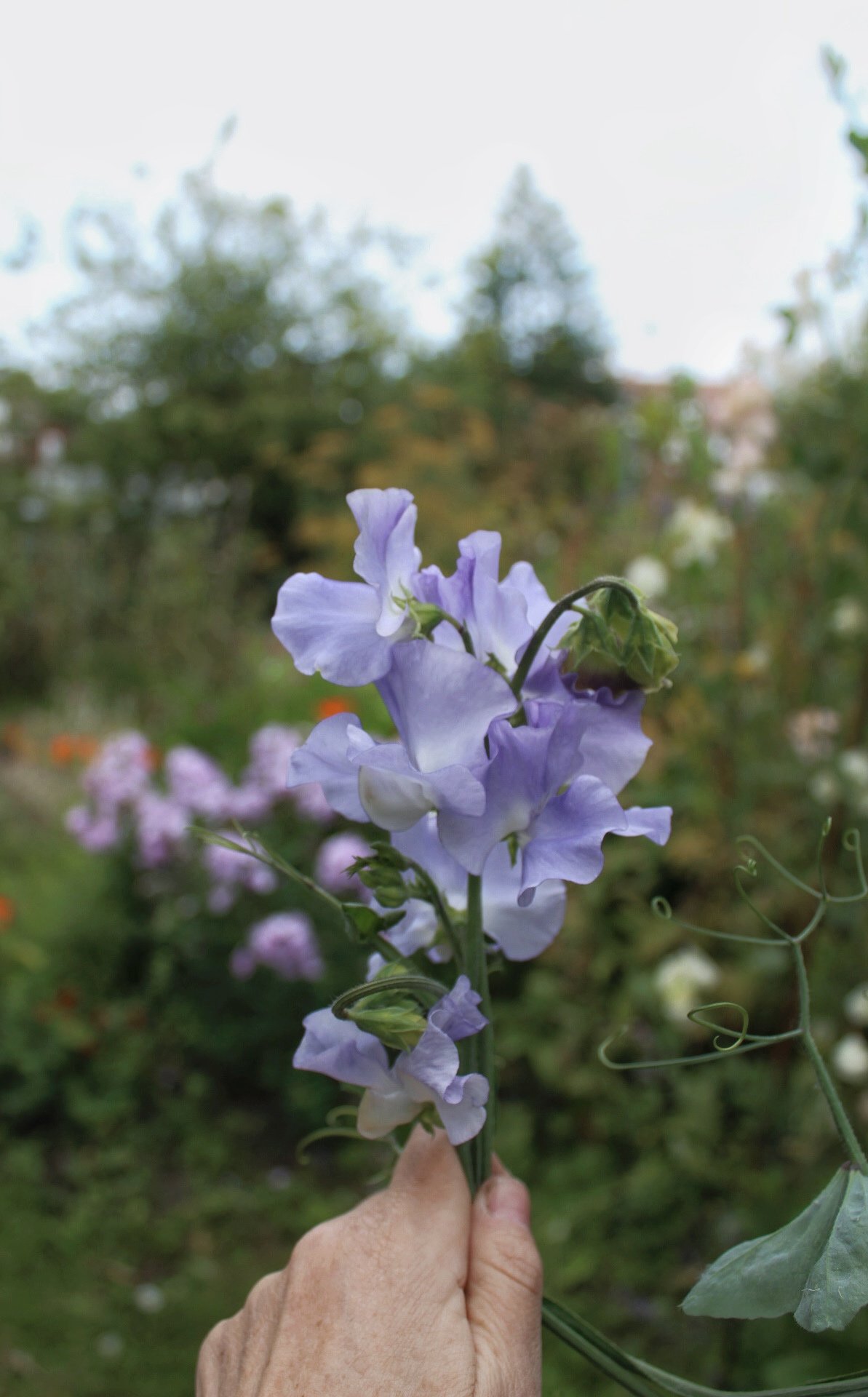
Sowing Sweet Peas in Spring
A practical guide for strong plants and a long flowering season
There is a persistent idea that sweet peas must be sown in autumn to succeed.
They don’t.
Spring sowing is not a compromise. In many gardens it produces the most reliable plants and the longest flowering season, particularly where winters are wet, cold, or unpredictable.
If you haven’t sown yet, you are not late. You are simply beginning at a different point in the season.
Late winter to early spring sowing (January–March)
Why sow sweet peas in spring?
Autumn sown plants flower earlier, but they are also older when summer arrives. As temperatures rise, mature plants often move quickly into seed production and flowering can slow sooner than expected.
Spring sown sweet peas grow into increasing light and warmth. They establish rapidly, remain vigorous through early summer, and frequently continue flowering later into the season.
For many growers, this balance makes spring sowing the most enjoyable and forgiving approach
The principle that matters most: root depth
Sweet peas do one thing before anything else.
They grow roots.
Given the opportunity, a sweet pea will send a long taproot downward before producing significant top growth. When that root run is restricted early on, plants pause, growth slows, and recovery takes time.
Depth at sowing makes a remarkable difference.
Choose containers that allow roots to travel downward from the start:
root trainers
deep modules
tall pots
Aim for a minimum depth of 10–15 cm.
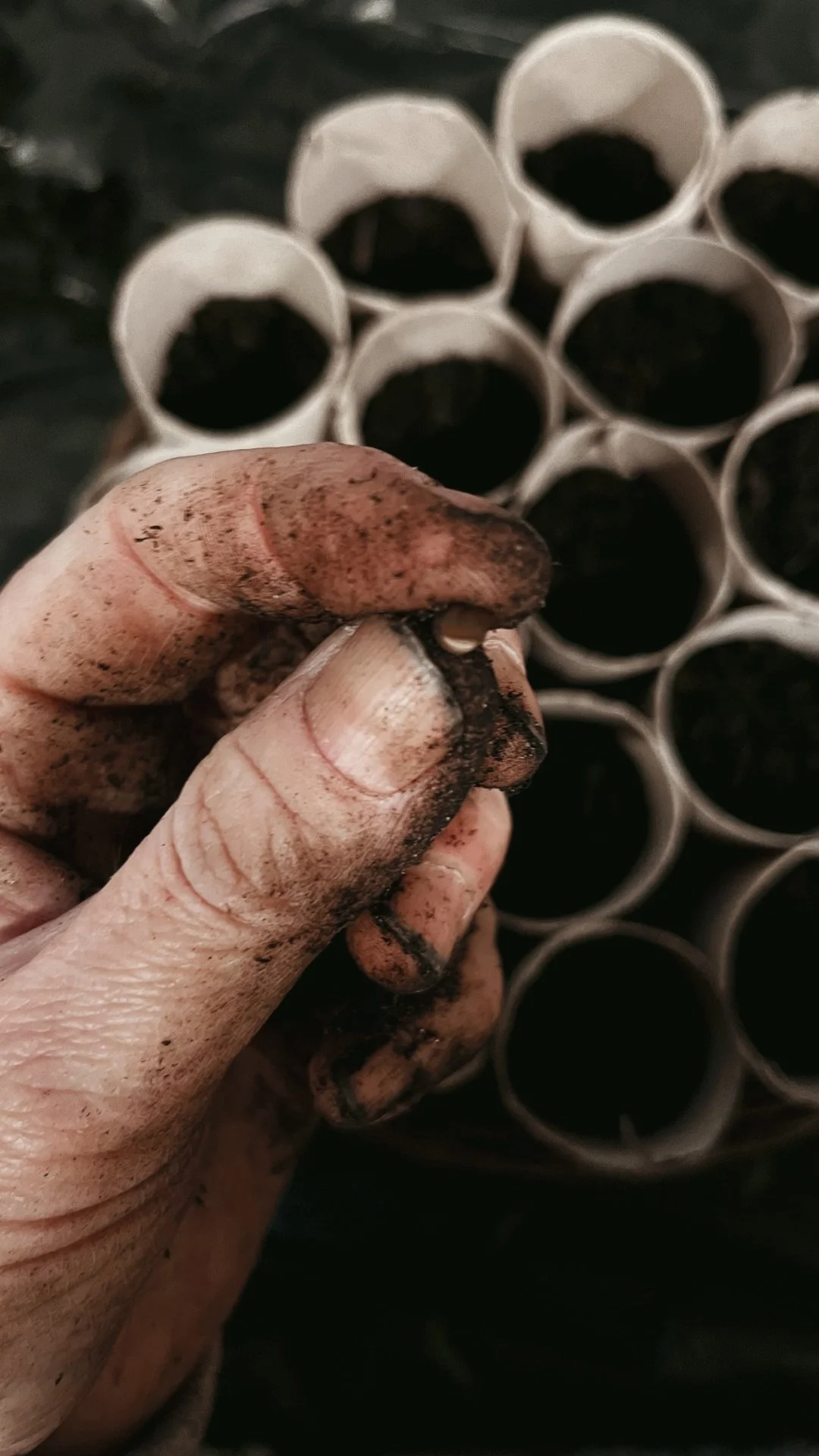

A note on toilet roll tubes
They are often recommended as an economical option or to look aesthetic, but in cool, damp conditions they can remain wet for too long. Cardboard softens slowly, airflow around the stem base is reduced, and seedlings may stall or rot before planting out.
In practice, stable containers with good drainage tend to produce stronger, more consistent plants.
Experience tends to favour reliability over novelty. I’ve learned this the long way.
How to sow
Fill deep containers with free-draining compost.
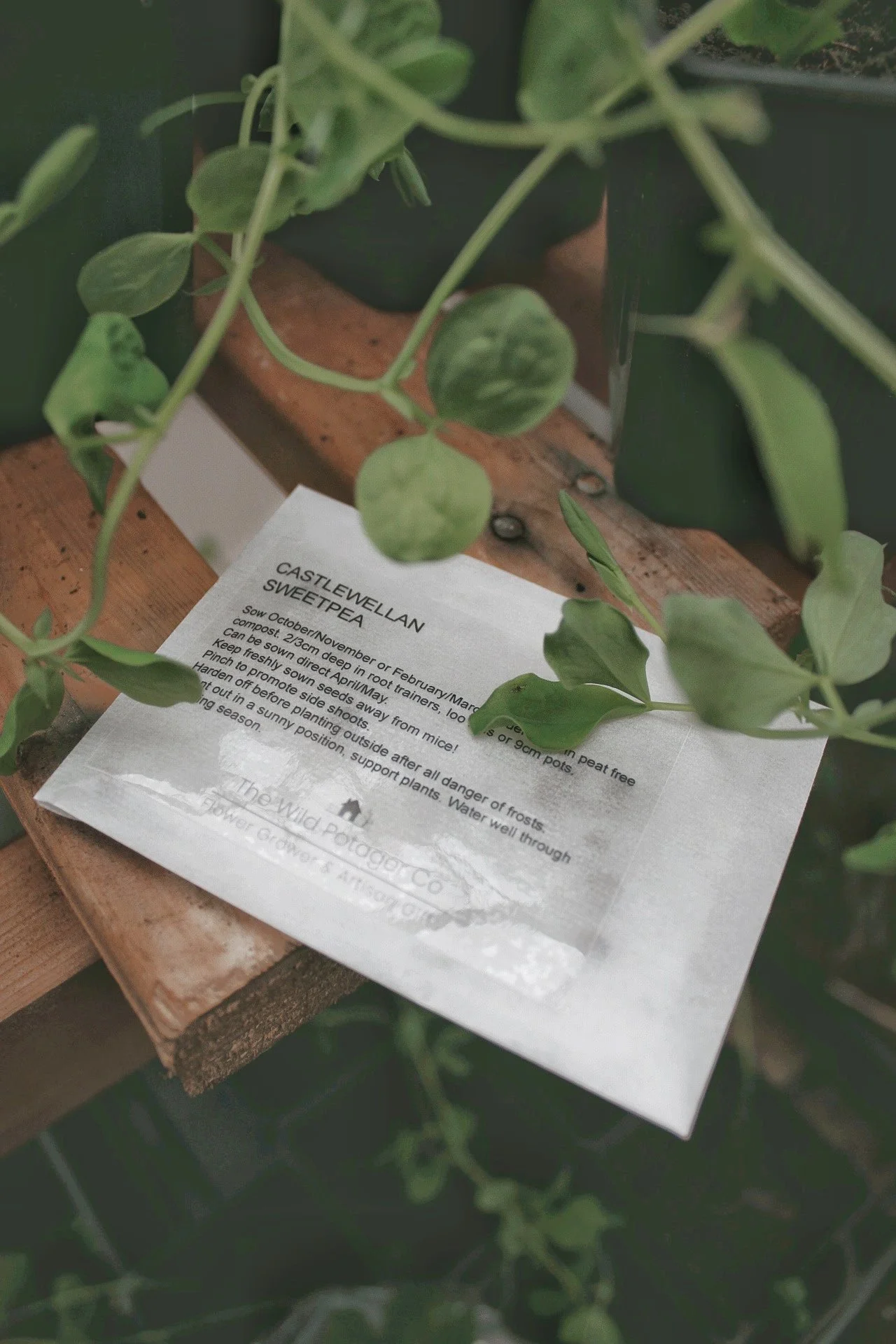
Sow seeds approximately 2–3 cm deep.
Water thoroughly once to settle the compost.
Place in a cool, bright position.
Sweet peas germinate happily in cool conditions. Heat is unnecessary but can be used to quicken the process. As soon as you see growth, remove from heat and place in correct growing conditions.
Done well, they reward you not only with flowers, but with rooms quietly filled with scent.
Protect freshly sown seeds
Sweet pea seeds are highly attractive to mice and other small rodents. Newly sown pots are often discovered long before germination begins.
If sowing in a greenhouse, cold frame, or shed, protect containers with mesh, a propagator lid, or another simple barrier until seedlings emerge.
Seeds rarely fail without reason; sometimes they are simply eaten.
After germination
Seedlings grow quickly once established.
When plants reach around 10 cm tall, pinch out the growing tip. This encourages branching and produces stronger plants with more flowering stems later in the season.
Grow plants cool and bright rather than warm and sheltered. Steady growth now creates resilience later.
Light and preventing leggy seedlings
Once seedlings emerge, light becomes more important than warmth.
Sweet peas grow best in bright, cool conditions. Warm rooms or low light encourage soft, elongated growth as plants stretch in search of light. These “leggy” seedlings are weaker and slower to establish after planting out.
Place young plants somewhere bright and airy, a greenhouse, cold frame, or cool windowsill with good natural light is ideal.
Cool temperatures combined with strong light produce short, sturdy plants with strong stems and healthy root systems.
If seedlings begin to lean or stretch, move them to a brighter, cooler position rather than increasing warmth.
Timing and expectations
Spring sowings typically flower slightly later than autumn ones, but often continue for longer.
Rather than racing the season, they grow alongside it.
Regular picking once flowering begins will keep plants productive and delay seed formation.
When to plant out
Plant sweet peas into their final position once roots have filled the container and plants are well established.
They tolerate cool conditions but dislike sitting in cold, waterlogged soil. Waiting until the ground begins to warm slightly often produces stronger early growth than planting too soon.
Provide support at planting time. Sweet peas climb immediately and settle faster when structure is already in place.
Spacing and planting depth
Plant seedlings slightly deeper than they were growing in pots, firming soil gently around the base.
Space plants approximately 20–25 cm apart. Good airflow reduces mildew later in the season and encourages stronger stems.
Water in thoroughly after planting.
Feeding and early care
Sweet peas benefit from fertile soil but excessive nitrogen encourages leaf growth at the expense of flowers.
Incorporating compost or well-rotted organic matter before planting is usually sufficient. Begin a balanced liquid feed once flowering starts rather than earlier.
Consistent watering during dry periods is more important than frequent feeding.
Picking and preventing early seed set
Regular picking is not simply maintenance, it is part of the conversation between you and the plant.
Sweet peas are eager to set seed. Left alone, fading flowers quickly turn to pods and the plant begins to slow, believing its work is done. By cutting stems often, you gently interrupt that cycle, encouraging continued growth and keeping the plants focused on producing flowers rather than finishing the season too soon.
Pick with intention and without hesitation. Aim for stems where the lowest flowers are fully open and the upper buds are just beginning to show colour. At this stage the stems are strong, the blooms open beautifully indoors, and the scent truly carries, filling a room rather than sitting quietly in a vase.
Go out regularly, scissors in hand, and gather generously. Sweet peas are not flowers to be rationed. Fill jugs, small bottles, and whatever vessels you have to hand. Bring in fistfuls. The act of cutting encourages abundance; the more you gather, the more the plants respond, sending up more stems and fresh blooms in return.
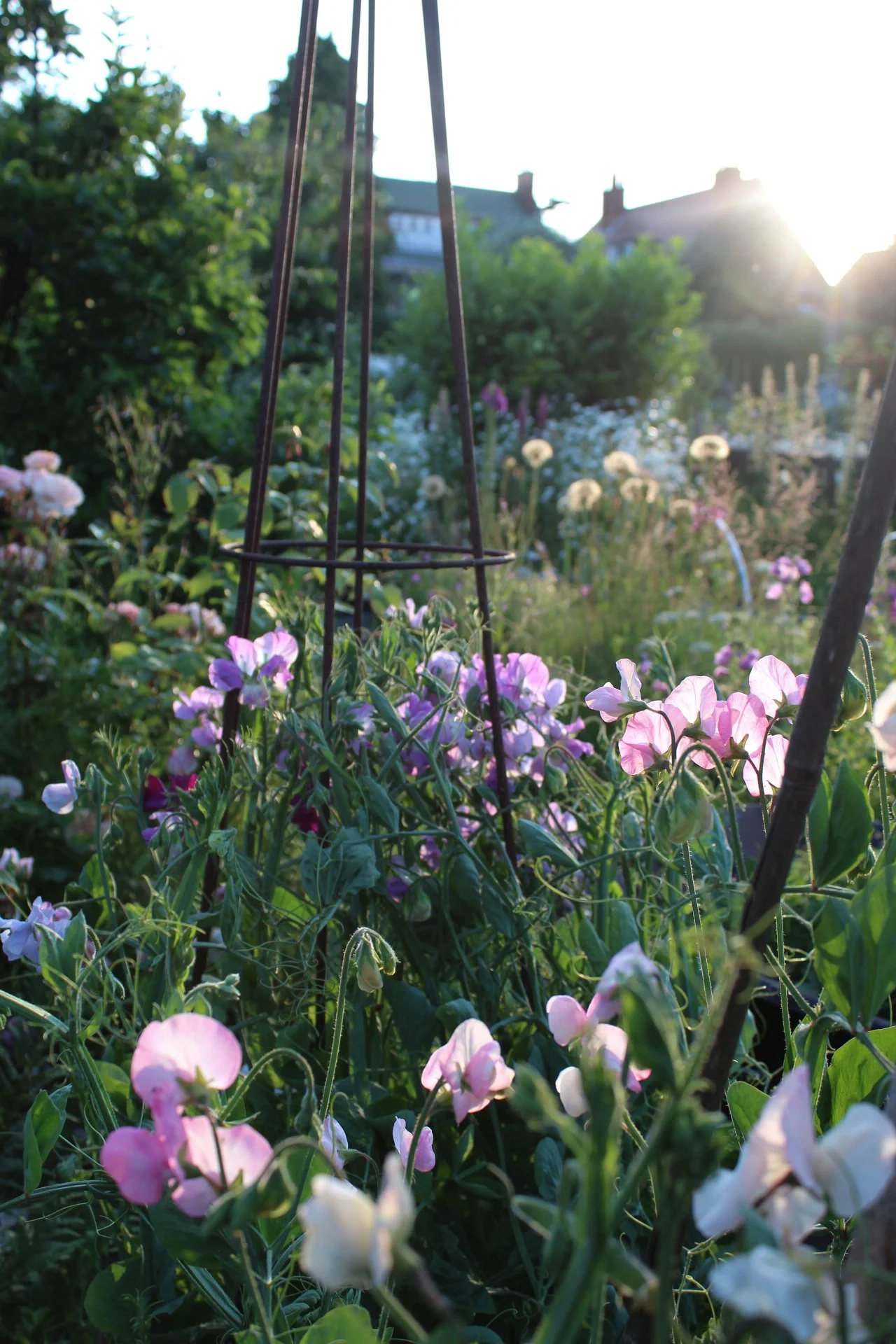
A well picked row of sweet peas never looks depleted. Instead, it renews itself, offering weeks of scent, movement, and colour, rewarding attention with generosity.
A quieter way to begin
Sowing sweet peas does not need to be complicated or perfectly timed. A handful of seeds, depth for roots, and patience while spring gathers momentum is enough.
Sometimes the best moment to start is simply the moment you begin.